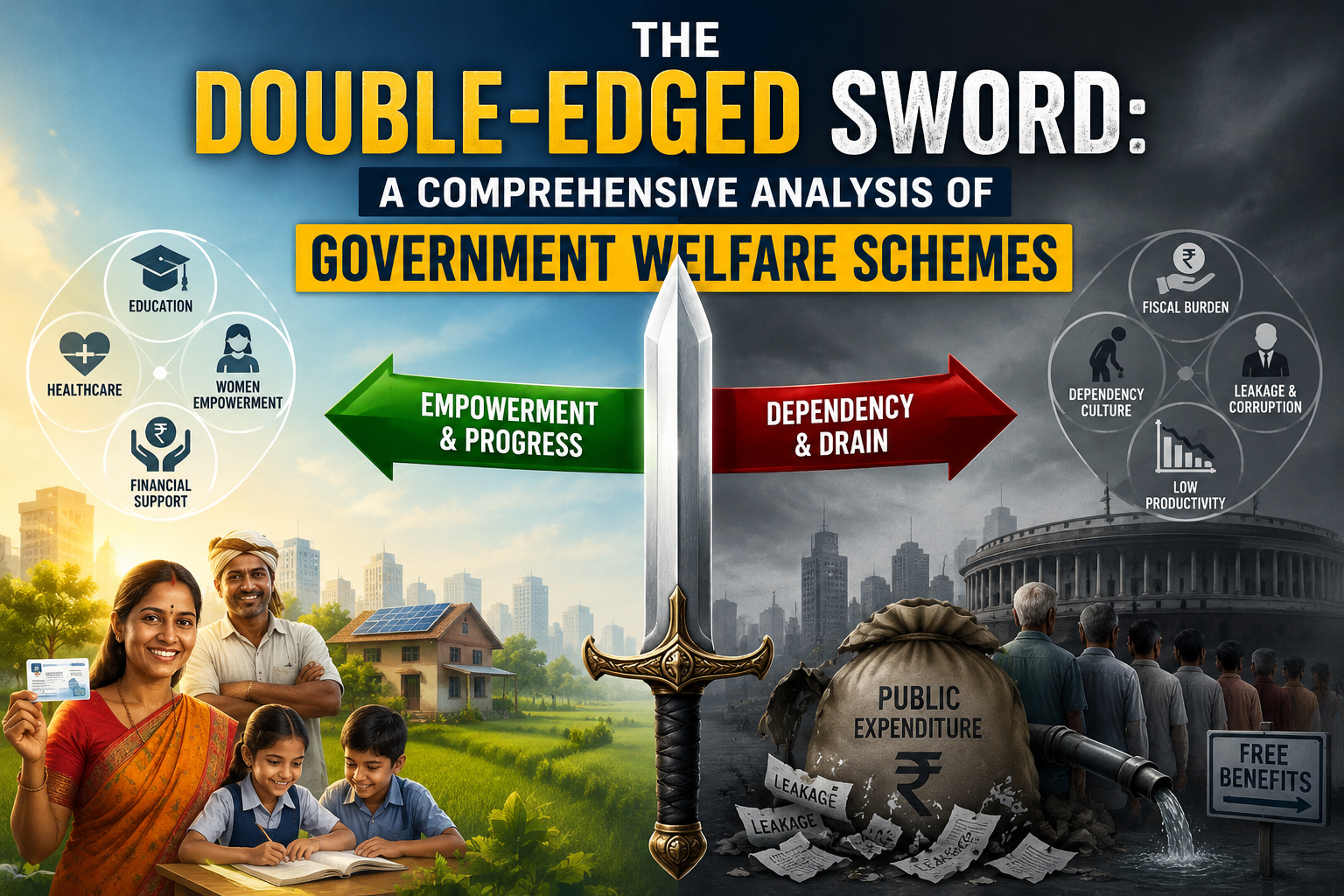
Throughout human history, the relationship between the individual and the collective has been a defining tension in the organization of society. In the modern era, this tension has crystallized into a fundamental question: what is the responsibility of the state towards its citizens? The answer, for most developed and developing nations, has been the establishment of government welfare schemes. These programs, designed to provide a safety net for the vulnerable, represent a monumental shift from the laissez-faire philosophies of the 19th century to the interventionist welfare states of the 20th and 21st centuries.The Double-Edged Sword
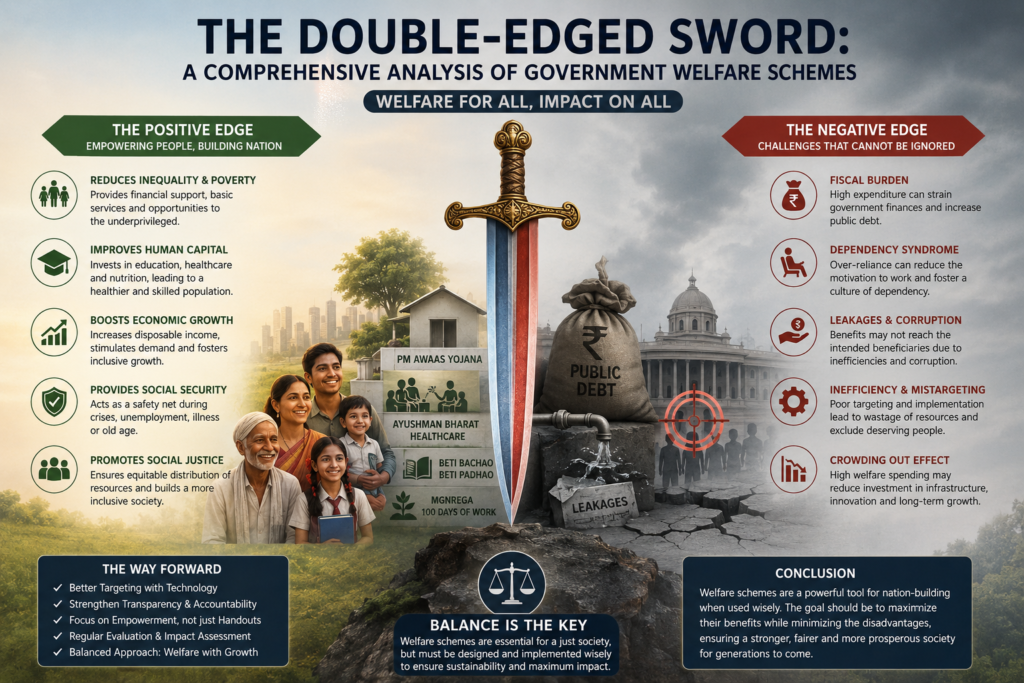
However, the discourse surrounding welfare is rarely one of simple altruism. It is a domain riddled with paradoxes. Welfare is lauded as a moral imperative that prevents destitution and fosters equality, yet criticized as a fiscal burden that breeds dependency and stifles economic growth. It is seen as a tool for social stability, yet sometimes accused of entrenching the very poverty it aims to alleviate. This essay argues that government welfare schemes are not merely charitable handouts, but complex mechanisms that operate at the intersection of ethics, economics, and politics. To understand them is to understand the modern state itself, with all its strengths, weaknesses, and inherent contradictions.
The Philosophical Underpinnings
Before dissecting the mechanics of specific programs, it is essential to understand the philosophical soil from which they grow. Welfare states are not born from economic data alone, but from powerful arguments about justice, rights, and the role of the community.
The Utilitarian Argument
One of the most practical justifications for welfare is utilitarianism—the idea that policies should maximize the greatest good for the greatest number. In this view, a dollar in the hands of a wealthy individual provides marginal utility (happiness or satisfaction), whereas the same dollar given to someone living in poverty can mean the difference between life and death. Welfare redistribution, therefore, theoretically increases overall societal happiness. Furthermore, utilitarian thought considers the “public bads” that arise from poverty, such as increased crime rates, public health crises, and social unrest. Investing in welfare is thus seen as a preemptive measure against the high costs of social decay.
Rawls’ Theory of Justice
The philosopher John Rawls provided a more nuanced framework with his theory of justice. He posited the concept of the “veil of ignorance,” asking us to imagine designing a society without knowing our own place in it—whether we would be rich or poor, healthy or sick. Rawls argued that rational individuals behind this veil would choose a society that prioritizes the well-being of the least advantaged, as they would want to ensure their own safety should they end up in that position. This principle—that social and economic inequalities should be arranged to benefit the worst-off—has become a foundational pillar for progressive welfare policies.
The “Social Contract” and Reciprocity
Beyond abstract philosophy lies the social contract. Citizens pay taxes under the implicit understanding that the state will provide services in return. This is not a one-way street; it is a system of reciprocal obligation. When individuals fall on hard times due to unemployment, disability, or old age, the state steps in to fulfill its side of the contract. This mutual interdependence reinforces the fabric of society, moving beyond the idea of charity—which is voluntary and conditional—to the concept of a right, which is assured and universal.
A Typology of Welfare Schemes
The implementation of welfare philosophy manifests in a dizzying array of programs. Broadly, these can be categorized into social insurance, social assistance, and universal services.
1. Social Insurance: “We Are All in This Together”
Social insurance is founded on the principle of risk pooling. Workers contribute to a fund during their employment years, which provides a safety net during specific life events. The quintessential examples are unemployment insurance, workers’ compensation, and public pensions (like Social Security in the US or the State Pension in the UK).
This is often the most politically popular form of welfare because it aligns with the Protestant work ethic; recipients have “paid into” the system and are thus seen as deserving of its benefits. It provides a vital link between labor and state support, smoothing out the boom-and-bust cycles of a capitalist economy.
2. Social Assistance: The Last Resort
Social assistance is means-tested and targeted at those who fall outside the safety net of social insurance. Programs like Temporary Assistance for Needy Families (TANF) in the US, or income support in other nations, are designed for the chronically poor, single parents, and the long-term unemployed.
These programs are often more stigmatized and politically precarious. They are subject to “welfare cliff” effects, where a slight increase in income results in a disproportionate loss of benefits, creating a disincentive to work. Furthermore, they are frequently subject to strict behavioral requirements, such as mandatory work searches or parenting classes, reflecting a “conditional” approach to welfare that seeks to reform the behavior of recipients.
3. Universal Services
Perhaps the most transformative and least disputed forms of welfare are universal public services. Education and public healthcare are not usually thought of as “welfare” in the popular imagination, but they are perhaps the most effective forms of it.
- Public Education: Free or subsidized education is a form of investment in human capital. It levels the playing field, providing children from low-income backgrounds with the tools to break the cycle of poverty. It is a redistributive mechanism that empowers the next generation.
- Public Healthcare: In nations with universal healthcare systems, the state removes the existential terror of medical bankruptcy. This is welfare at its most protective. It ensures that health—the most fundamental prerequisite for productivity and happiness—is not a commodity to be bought and sold.
The Economic Arguments: Burden or Stimulus?
The economics of welfare are fiercely debated. Critics often portray welfare as a “handout” that drains the productive economy, while proponents view it as a crucial “stabilizer” and engine of growth.
The Case for Welfare as a Stimulus
Keynesian economists argue that welfare programs function as “automatic stabilizers.” During a recession, tax revenues fall and welfare enrollment rises automatically. This influx of government money to the poorest segments of society is crucial because the poor have a higher marginal propensity to consume. They spend their income immediately on rent, food, and utilities. This spending sustains aggregate demand, prevents deflation, and mitigates the severity of an economic downturn.
Furthermore, welfare can be viewed as a form of “social investment.” A healthy, educated population is a productive workforce. Children who receive proper nutrition through food assistance programs perform better in school and earn higher wages as adults. This “human capital” theory suggests that welfare is not just a cost, but a down payment on a nation’s future prosperity.
The Case Against Welfare: The Problem of “Deadweight Loss”
Classical and neoliberal economists contend that welfare creates “deadweight loss” by distorting market incentives. High levels of taxation required to fund extensive welfare states reduce the reward for labor and investment. If an individual can receive a significant portion of their previous income while unemployed, the urgency to find a new job diminishes.
Similarly, generous pensions may encourage early retirement, reducing the size of the labor force. When welfare becomes a lifestyle rather than a safety net, it traps individuals in a cycle of poverty. The dependency theory posits that without the pressure of survival, the poor lose the motivation to participate in the economy, leading to a permanent “underclass” that is disconnected from the workforce.
The “Race to the Bottom”
On a global scale, welfare states face pressure from globalization. As capital becomes more mobile, multinational corporations can choose to locate their operations in countries with lower taxes and laxer labor regulations. To attract foreign direct investment, governments often feel compelled to reduce corporate taxes and deregulate, which inevitably shrinks the pot of money available for welfare spending. This “race to the bottom” means that generous welfare states must constantly justify their existence in a hyper-competitive global market.
The Political Dimension: The Culture War of Welfare
Perhaps the most intractable debates about welfare are not economic, but cultural and political. Welfare is a lightning rod for discussions about morality, race, and national identity.
“Deserving” vs. “Undeserving” Poor
A persistent bifurcation exists in the public psyche between the “deserving” and “undeserving” poor. The elderly, disabled, and children are almost universally seen as deserving; they bear no responsibility for their condition. Conversely, the able-bodied unemployed, particularly the long-term unemployed, are often viewed with suspicion. This dichotomy fuels a punitive approach to social assistance, where programs are designed to be as uncomfortable and stigmatizing as possible to ensure that only the truly desperate apply. This “less eligibility” principle—that life on welfare should be less attractive than the lowest-paying job—informs many workfare requirements.
The Myth of the “Welfare Queen”
Politically, welfare has been weaponized to exploit racial and class resentment. The myth of the “Welfare Queen”—a lazy, often minority individual defrauding the system to live a life of luxury—has been a potent image in American and Western politics. While the reality of welfare fraud is statistically minuscule compared to corporate tax evasion or payroll fraud, the perception of widespread abuse drives public opinion. This narrative serves to undermine solidarity and justify cuts to safety net programs, painting all recipients with a broad brush of suspicion.
The Future of Solidarity
The political sustainability of welfare depends on social solidarity—the feeling of “we are all in this together.” This solidarity is strongest in ethnically homogeneous nations like the Nordic countries, where high trust in government and a cultural emphasis on collectivism allow for large welfare states. In more diverse or individualistic nations, solidarity fragments. When citizens feel that their tax money is going to people “not like them,” they are less willing to support generous transfers. This demographic and cultural fracturing poses a significant existential threat to the welfare state model.
Case Study: The Nordic Model vs. The American Approach
To ground these abstract arguments, a comparison of distinct welfare regimes is illuminating.
The Nordic Model: Universalism and Activation
The Nordic countries (Sweden, Denmark, Norway, Finland) are often held up as the gold standard of welfare. They feature high taxes, generous benefits, and a philosophy of universalism—meaning everyone, regardless of class, receives benefits like child allowances and healthcare. However, the Nordic model is not a “giveaway” system. It is deeply intertwined with an “activation” principle, often called “flexicurity.” The state provides a generous safety net, but in return, it demands aggressive participation in the labor market, training, and education. The goal is to make the unemployed “employable.” High trust in institutions and a strong labor union presence facilitate this bargain.
The American Approach: Residual and Means-Tested
The United States represents a residual welfare state. It provides a basic safety net for the poorest—food stamps (SNAP), Medicaid, and subsidized housing—but these programs are means-tested and fragmented. They feature complex application processes, bureaucratic hurdles, and significant coverage gaps. The American approach is deeply influenced by the myth of the “self-made man” and a cultural suspicion of government intervention. As a result, the US spends a relatively high amount on welfare in absolute terms (largely on healthcare for the elderly via Medicare), yet leaves a higher proportion of its working-age population in poverty than other developed nations. The reliance on tax credits (like the Earned Income Tax Credit) rather than direct cash transfers is a compromise between free-market ideology and the need for social support.
Global Perspectives: Welfare in Developing Nations
In developing economies, the nature of welfare is fundamentally different. The lack of formal employment means that traditional social insurance models are largely irrelevant. Instead, welfare aims to combat extreme poverty and improve human development indicators.
Conditional Cash Transfers (CCTs)
Programs like Brazil’s Bolsa Família and Mexico’s PROGRESA/Oportunidades have become global models for poverty reduction. These programs give cash directly to poor families, but conditionally—requiring that children attend school regularly and receive vaccinations. This approach breaks the intergenerational cycle of poverty by investing in the next generation’s health and education. CCTs have been praised for their effectiveness in reducing poverty and improving nutritional outcomes, but they are also criticized for their paternalistic nature and vulnerability to political manipulation.
Food Security Programs
In countries like India, welfare often takes the form of food distribution. The Public Distribution System (PDS) provides subsidized food grains to millions of families. This acts as a direct intervention against malnutrition and hunger. Similarly, feeding programs in schools serve a dual purpose: they provide nutrition to children and create an incentive for poor families to send their children to school. These programs are inefficient—plagued by leakages and corruption—yet they are politically sacred because they represent a tangible link between the government and the hungry populace.
The Psychological Toll: Stigma and Dignity
One of the most overlooked aspects of welfare is its psychological impact. The process of applying for welfare is often dehumanizing. Long queues, invasive questions about personal finances, and the constant suspicion of fraud create a feeling of shame and humiliation.
For recipients, the receipt of welfare can be a double-edged sword. On one hand, it provides material relief. On the other, it can erode self-esteem and independence. Welfare can strip individuals of their agency, turning them into passive subjects of state bureaucracy. The concept of “learned helplessness” suggests that long-term reliance on aid can reduce an individual’s capacity to solve problems and pursue goals.
The debate over “cash vs. services” is relevant here. Cash transfers (like a Universal Basic Income) are gaining popularity because they restore dignity; they treat recipients as rational actors capable of managing their own lives. Traditional services, on the other hand, often infantilize the poor, dictating how they should spend their money and live their lives. The future of welfare may well depend on ceding power back to the citizen.
Future Challenges
As we look towards the future, three major forces are shaping the evolution of welfare.
1. Demographic Shift and Aging Populations
The post-WWII “Baby Boomer” generation is retiring. This creates a perfect storm: the number of workers paying into pension and healthcare systems is shrinking, while the number of retirees drawing benefits is expanding. This demographic squeeze threatens the solvency of pay-as-you-go social security systems. Governments are forced to raise retirement ages, cut benefits, or significantly increase immigration to bolster the labor force.
2. The Automation Threat
Technological advancement and artificial intelligence are poised to eliminate millions of jobs in manufacturing, transportation, and even white-collar sectors. If a significant portion of the population is rendered “redundant” by machines, the traditional welfare model—based on linking benefits to employment (social insurance)—will collapse. This has led to a revival of interest in the Universal Basic Income (UBI). UBI posits that the state should provide a basic, unconditional income to all citizens, decoupling survival from employment. Proponents argue this will allow people to pursue creative, entrepreneurial, or caregiving work. Critics argue it is financially impossible and would destroy the incentive to do unpleasant but necessary jobs.
3. Climate Change and Climate Migration
Climate change is already acting as a “threat multiplier.” Extreme weather events displace populations, destroy agricultural livelihoods, and strain healthcare systems. Welfare states will increasingly be called upon to act as emergency responders and to manage climate migration. This will require massive investment in adaptation and resilience, placing unprecedented pressure on state budgets.
Conclusion: A Moral and Practical Necessity
Government welfare schemes are a testament to human civilization’s capacity for empathy and collective action. They represent the formalization of the instinct to protect the vulnerable within our community. However, they are not a panacea. The history of welfare is a story of imperfect solutions, political battles, and unintended consequences.
The dichotomy between “handout” and “hand-up” is a false one. Effective welfare is an investment—a cost that yields dividends. It is a tool for economic stabilization, a mechanism for social mobility, and a reflection of our moral values. The challenge is not whether to have welfare, but how to design it.
The future of welfare lies in adaptation. It must adapt to demographic pressures, technological disruptions, and climate realities. It must move beyond punitive conditionality and stigmatizing bureaucracy to embrace principles of dignity, activation, and flexibility. A welfare state that empowers its citizens, rather than enfeebles them, is not a burden on a nation’s greatness; it is the foundation of it. In the end, the measure of a society is indeed how it treats its most vulnerable, but it is equally measured by how it uses the tools of the state to ensure that the vulnerable are given the genuine opportunity to become independent and thriving members of the body politic.